






SAL Logistics Zones
An integrated logistics ecosystem platform in the making
SAL Logistics Zones represent the Company’s evolution from operating logistics services to developing integrated logistics ecosystems. It marks a strategic expansion beyond standalone warehousing into the creation of large-scale, infrastructure-backed environments where trade, manufacturing, advanced logistics, and digital enablement converge.
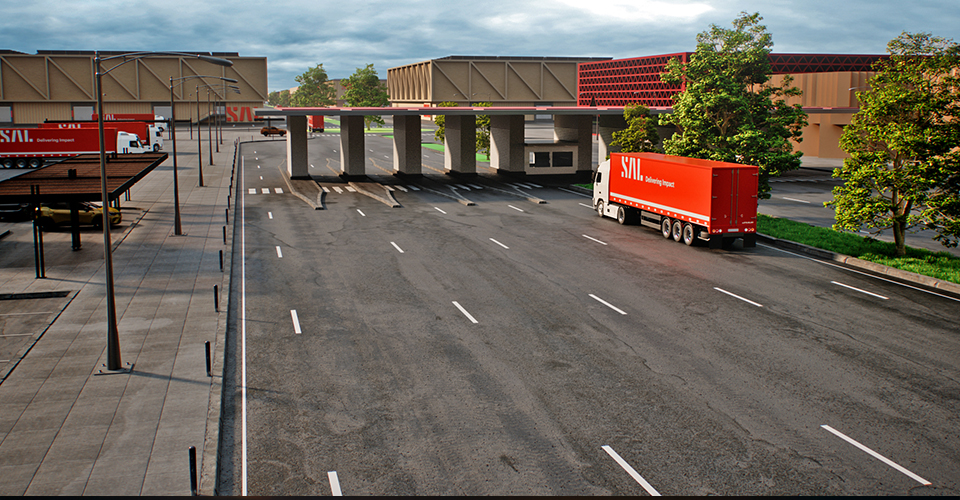
At the center of this platform is the development of the SAL Logistics Zone in Riyadh – a flagship, multimodal hub located in Falcon City, Malham, north of Riyadh. Spanning approximately 1.57 million square meters, with planned and approved investments of approximately X 4.1 billion, the project is designed to offer world-class warehousing, storage, and seamless multimodal connectivity across air, road, and future rail infrastructure. Revenue generation is expected to commence from 2028 as Phase 1 matures and leasing progresses.
SAL Logistics Zones builds on the Company’s established scale in Cargo Ground Handling and Logistics, embedding cargo flows into long-duration, infrastructure-like assets. Rather than providing individual services, SAL is creating physical ecosystems that allow logistics operators, manufacturers, distributors, and end-customers to co-locate and scale over extended time horizons. This model enhances integration, strengthens customer stickiness, and deepens SAL’s role within national supply chains.
Develop logistics parks
enabling ecosystem expansion
Generate sustainable recurring revenues through long-term leasing
Support national trade and industrial diversification goals

SAL’s Malham Zone in Riyadh - From Concept to Execution (The Start)
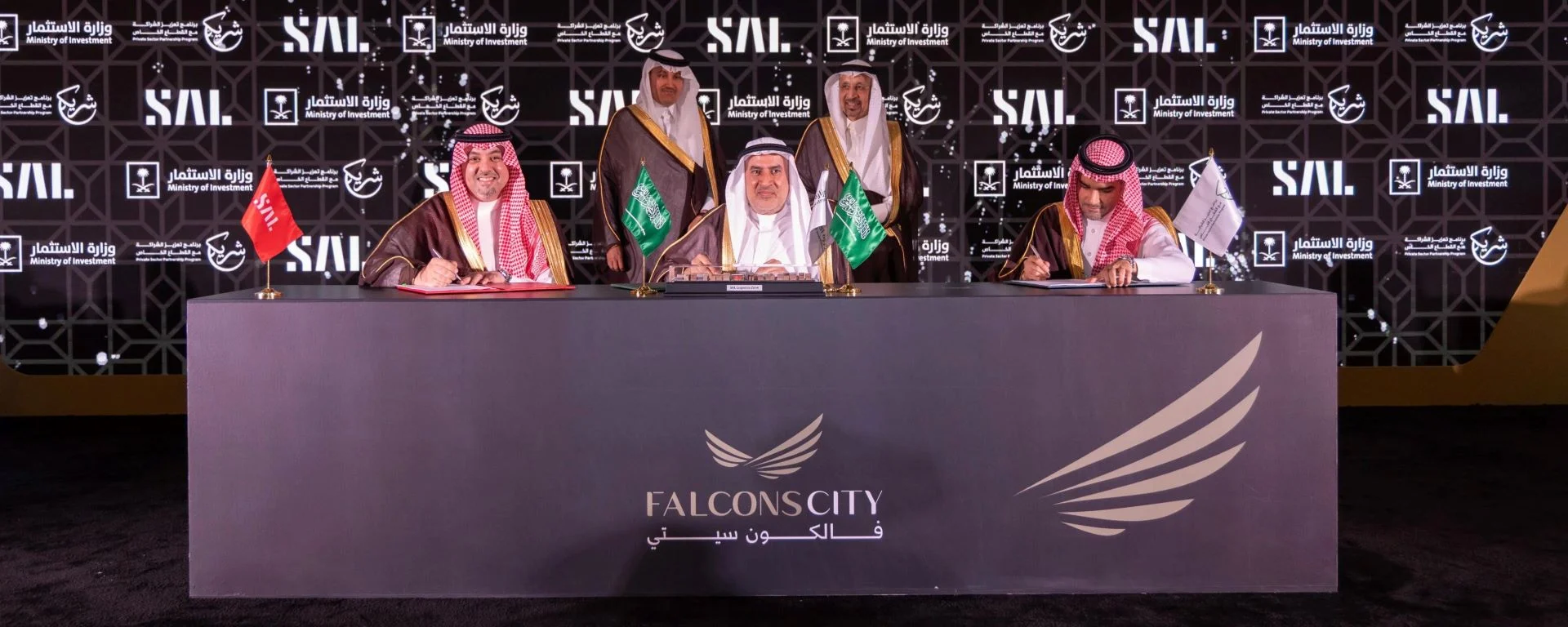
In mid-March 2025, SAL formalized the establishment of the SAL Logistics Zone in a ceremony attended by His Excellency the Minister of Transport and Logistic Services and His Excellency the Minister of Investment, along with a number of other senior government officials and SAL’s Board members, underscoring the national significance of the project. The event also saw the signing of agreements supporting the development, including arrangements with Sela Company and the Shareek Program to facilitate execution.
In October 2025, SAL completed the final sub-usufruct agreement for approximately 1.57 million square meters of land in Falcon City, representing a modest increase in total area versus the preliminary agreement, with no change to lease duration or grace terms. This milestone secured the land position and marked a transition from planning to structured development.
During 2025, the focus was on disciplined progression of the Falcon City development. This included master planning, design finalization, regulatory coordination, early enabling works, and structured engagement with prospective tenants. Throughout this phase, the emphasis remained on readiness, disciplined sequencing, and demand visibility rather than rapid build-out, reflecting SAL’s capital allocation discipline and risk-managed approach.
What is SAL’s Malham Zone in Falcon City?
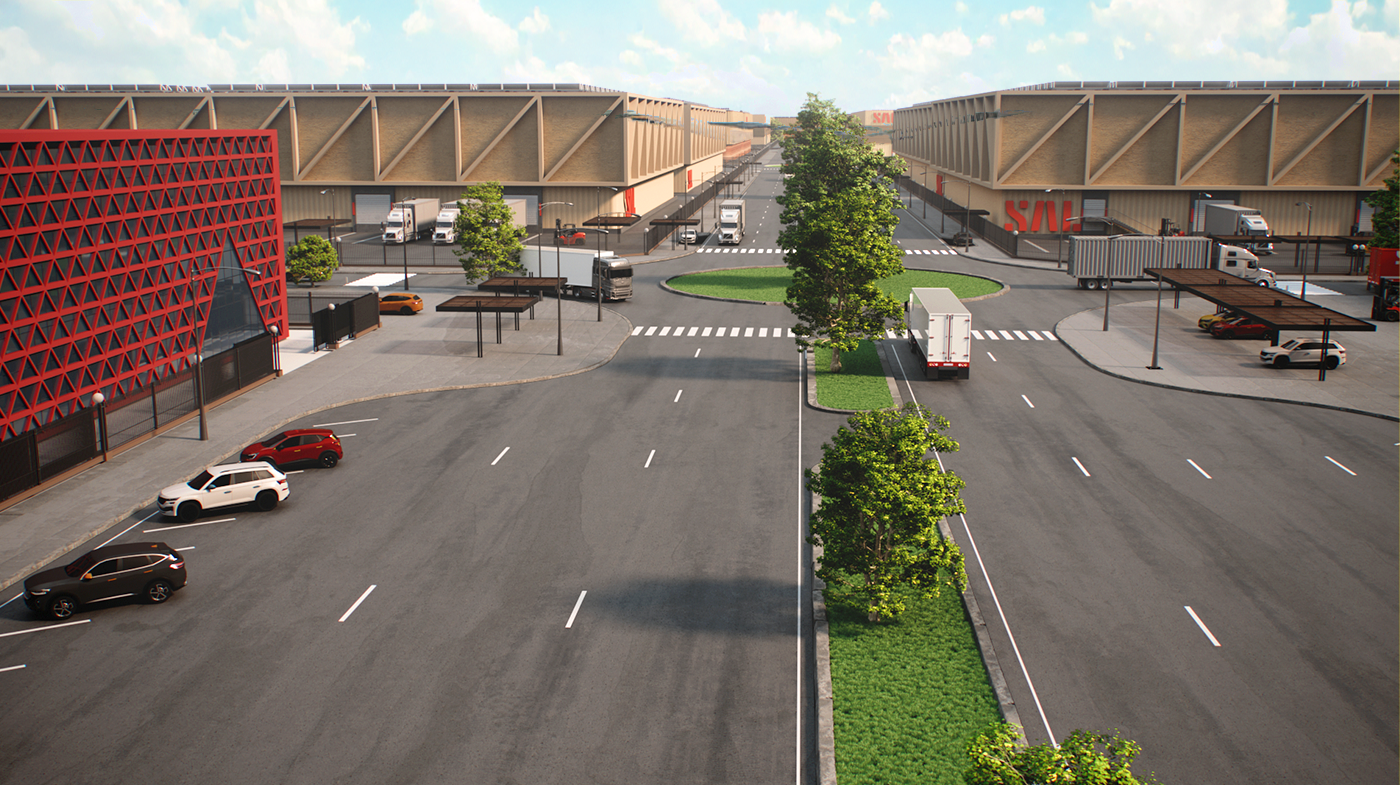
SAL Logistics Zone is not simply a warehouse park. It is a multi-tenant logistics ecosystem designed to integrate infrastructure, services, and connectivity within Riyadh’s expanding industrial corridor. The development combines pre-built and build-to-suit facilities with supporting infrastructure and operational services. Its strategic location provides direct access to major highways, proximity to King Khalid International Airport, and planned integration with future rail infrastructure, enabling multimodal transport across air, road, and rail.
The Malham Zone is designed to accommodate a diversified tenant mix, including direct end-customers, third-party logistics providers, and SAL’s own contract logistics operations. Development follows a phased and gated model, aligned with leasing milestones and demand visibility, reinforcing a structured risk management framework. As a platform, SAL Logistics Zones complements Cargo Ground Handling and Logistics by creating a physical environment in which customers, partners, and SAL’s service capabilities converge. While still at an early stage of execution, 2025 established the foundational infrastructure, regulatory alignment, and commercial engagement necessary for long-term scale.
We recognized the fast-evolving needs of our customers and the growing demand for more sophisticated, integrated logistics solutions. That’s why we developed the concept of SAL Zones to proactively address these market shifts and position SAL for the future.
By 2030, SAL Logistics Zone will represent a major pillar of the Company’s growth

over X 4.1 billion worth of investments.
close to 900,000 square meters of world class logistics infrastructure capacity.
between X 400-500 million in recurring revenue annually.
This project provides scale with purpose – meeting today’s demand while anticipating tomorrow’s.
Why the Timing is Structurally Attractive?
The macroeconomic fundamentals supporting this initiative are compelling. Saudi Arabia’s warehouse sector is projected to grow at a double-digit rate, supported by substantial national logistics infrastructure investments under Vision 2030 programs. With nationwide warehouse occupancy exceeding 97% and demand expected to outpace supply by an estimated 10 million square meters by 2030, the Kingdom faces a structural shortage of premium Grade A logistics capacity.
The SAL Logistics Zone is strategically positioned to capture this gap. Its location within Riyadh’s active industrial and giga-project corridor places it at the intersection of production and consumption centers. With the majority of the Saudi population reachable within 12 hours and strong highway connectivity, the Zone offers a clear geographic advantage for national distribution.
This structural supply-demand imbalance reinforces the long-term relevance of the SAL Logistics Zones platform.
- SAL Logistics Zone Uniquely Positioned to Capture KSA Future Demand
Our strategy here is to expand beyond the core of cargo ground handling into an integrated logistics platform with three objectives:

Diversify revenue beyond cargo ground handling into higher-value, recurring revenues
Leverage cargo ground handling scale to feed landside logistics operations and zones
Capture new demand from e-commerce and vision 2030 industrial expansion
- Leveraging a Highly Compelling Value Proposition
SAL Logistics Zone’s competitive positioning is anchored in infrastructure quality, connectivity, and tenant support. The development will offer premium, smart logistics infrastructure with modular design flexibility, allowing tenants to scale efficiently. Multimodal connectivity across air, road, and future rail provides distribution optionality. The Zone will also provide integrated administrative and regulatory support services, enabling tenants to operate within a streamlined, one-stop-shop environment. Tenants do not simply lease space; they join an ecosystem that connects production, distribution, and logistics services within SAL’s national operating framework. This integration enhances customer stickiness and strengthens cross-selling opportunities across the Company’s business units.
In a thriving ecosystem…
Active industrial hub corridor
Direct highway and future rail access, 74 km from KKIA
Between production and consumption centers
Primed for North Riyadh growth demand capture
Delivering a competitive positioning…
Premium, smart infrastructure
Industry-tailored solutions, modular plot design
Multi-modal connectivity (air, road, rail)
Turnkey support services
One-stop-shop for Admin and Regulatory
Cutting-edge technology
- Anchoring Long-term Value While Following a Prudent Approach
SAL’s approach to Logistics Zones is anchored in disciplined capital deployment and risk mitigation. Development follows a phased execution model, combining pre-built and built-to-suit structures to reduce vacancy exposure. SAL Logistics itself acts as a core anchor tenant, providing baseline occupancy and reinforcing internal integration. On the value creation side, the focus remains on securing competitive returns, maximizing occupancy, and enhancing margins through cross-selling and value-added logistics services. Lease tenures are expected to range between five and twenty years, supporting stable and recurring revenue streams.
This is a model designed not only to capture revenues, but to secure them over extended durations.
- Focused Tenant Strategy to Drive Resilience and Scale
SAL Logistics Zone is structured around three core tenant categories: direct end-customers such as manufacturers and retailers; 3PLs or third-party logistics providers seeking strategic regional hubs; and SAL’s own Logistics business unit.
This diversified mix supports occupancy resilience, balanced risk exposure, and cross-selling opportunities. It reduces reliance on any single tenant category while reinforcing ecosystem integration. Commercial engagement during 2025 demonstrated encouraging momentum, with strong interest from prospective tenants representing significant potential leased area. As Phase 1 matures, leasing progress is expected to accelerate, supporting revenue ramp-up from 2028 onward.
By Primarily Focusing on Three Tenant Categories
|
Targeted tenant |

SAL Logistics BU |
Direct end-customers |

3PLs (3rd party) |
|||
|
Role in the zone |
|
|
|
|||
|
Needs |
|
|
|
|||
|
Examples |
SAL |
|
|
|||