





Forward Outlook
A structurally positive but demanding operating environment
Looking ahead, SAL operates in a logistics environment characterized by strong structural demand alongside increasing operational complexity. Air cargo, integrated logistics, and warehousing demand are expected to continue expanding, supported by global trade growth, the rise of e-commerce, and Saudi Arabia’s ambition to strengthen its position as a global logistics hub.
At the same time, the operating environment remains demanding. Competitive intensity is increasing, customer expectations continue to rise, and volatility across global trade and supply chains persists. Success over the medium term will therefore depend not only on capturing growth, but on doing so with reliability, disciplined execution, and operational resilience.
Against this backdrop, SAL’s integrated platform across Cargo Ground Handling, Logistics, and Logistics Zones is well positioned to manage both opportunity and uncertainty, supported by capacity readiness, operational discipline, and consistent execution.
Path to 2030
From today’s platform to tomorrow’s scale
SAL’s path to 2030 is defined by progressive scaling rather than step-change expansion. Each business platform advances at a pace aligned with its maturity, demand visibility, and capability readiness.
Cargo Ground Handling continues to scale in line with air cargo growth, maintaining its role as the operational and cash-generating backbone of the Company. Logistics expands SAL’s participation across higher-value, integrated solutions, with capability development preceding accelerated volume growth. Logistics Zones provide the physical and regulatory platforms that anchor future logistics activity, allowing scale to be added as demand materializes.
Across all platforms, integration strengthens over time, improving utilization, resilience, and earnings quality. Capital and capacity are deployed in phases, supported by operational readiness and balance sheet strength.
2030 Targets
Ambition, clearly framed



2030 Ambition: Three Dimensions
Scale & Footprint

2.0 million
tonnes Air Cargo Handled
Logistics Footprint 8x expansions vs current platform
Logistics Zone Contribution by 2030 X 400 million revenue
Financial Trajectory
X 4.1 billion
Consolidated Revenues by 2030
16% Revenue CAGR (2024-2030)
40% Minimum EBITDA Margin
Capital Management
X 5.2 billion Total CAPEX (2024-2030)
3.0x – 4.0x Net Debt/EBITDA Leverage Ratio
(Targets based on SAL’s 2024 operating baseline and expected platform scaling across Cargo Ground Handling, Logistics and Logistics Zones.)
SAL’s 2030 targets reflect platform-led scaling, improving earnings quality, and a clearly defined capital envelope aligned with long-term value creation. SAL’s 2030 ambition is defined across three interrelated dimensions: the scale and reach of its operations, the financial trajectory of the Company, and the disciplined deployment of capital to support growth. These three dimensions are deliberately interconnected. Scale is pursued selectively and in phases, financial performance is driven by mix and integration rather than volume alone, and capital deployment is sequenced to preserve flexibility and resilience.
Earnings Quality and Balance
Growth that is resilient and diversified
Platform Scaling to 2030
Growth to 2030 is increasingly diversified across Cargo Ground Handling, Logistics and Logistics Zones, with scale added progressively and capability built ahead of volume.
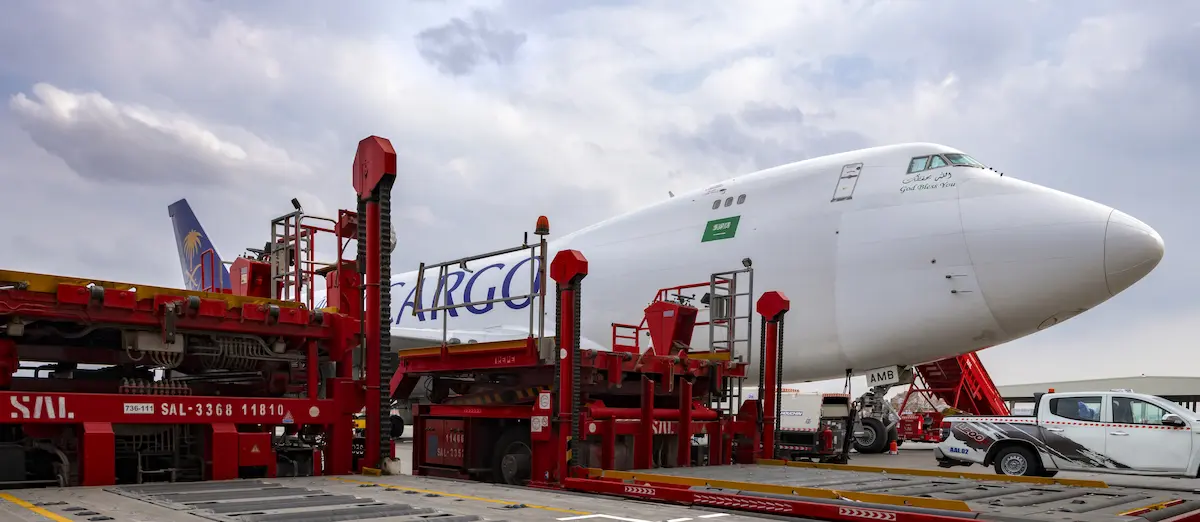
Cargo Ground Handling

Remains the single largest contributor
Growth driven by volume and operational efficiency
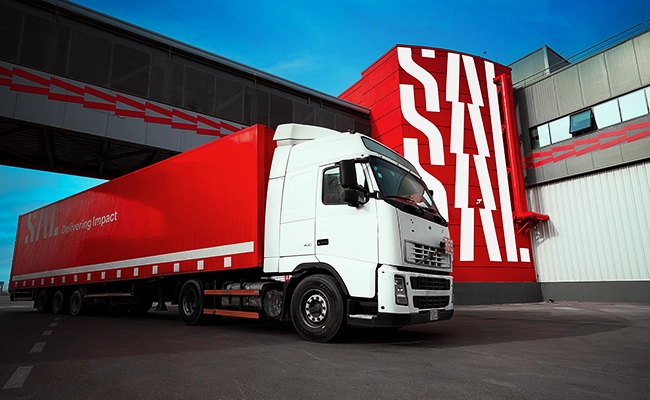
Logistics

Fastest-growing platform
Increasing share of Group revenue through integration and higher-value services
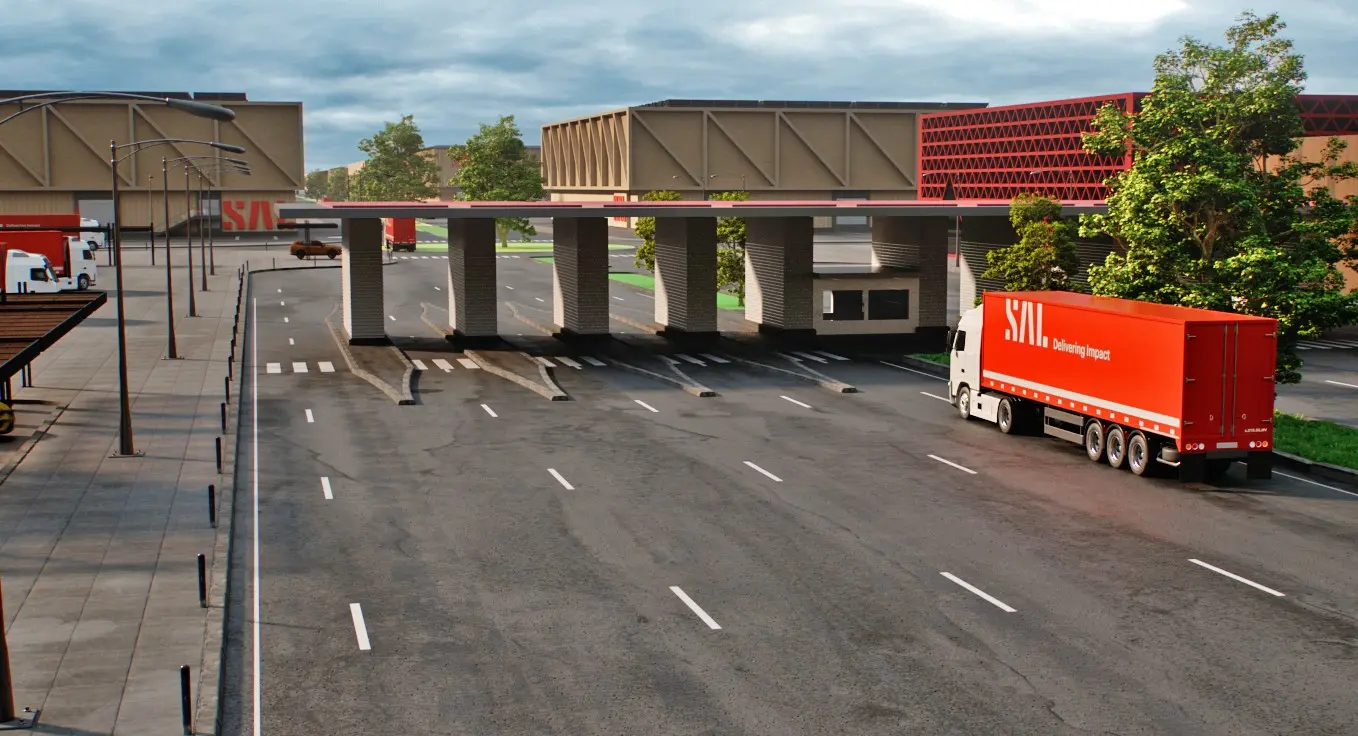
Logistics Zones

Strategic role as long-cycle, recurring income platform
As the strategy progresses toward 2030, SAL’s earnings profile is expected to become more balanced and resilient. Growth is increasingly diversified across Cargo Ground Handling, Logistics and Logistics Zones, reducing reliance on any single activity or demand driver.
Cargo Ground Handling remains a major contributor, providing stability and cash generation. Logistics scales into integrated, higher-value services across sea, air, and land, deepening customer relationships and improving earnings quality. Logistics Zones add long-cycle, recurring income streams and embedded growth optionality.
By 2030, the Company’s revenue mix is expected to be more diversified across divisions. Cargo Ground Handling is projected to contribute approximately X 2.2 billion, reflecting its scale and stability. Logistics is expected to contribute around X 1.5 billion, driven by integrated logistics services. Logistics Zones, while smaller in absolute terms at approximately X 0.4 billion, provide long-cycle recurring income and embedded growth optionality.
Capital Allocation and Financial Stewardship
Funding growth responsibly
Capital Deployment Phasing to 2030
Total Capex (2024-2030): ~X 5.2 billion
Near Term
Core handling capacity
Logistics capability buildout
Mid Term
Logistics scale-up
Initial Logistics Zones monetization
Long Term
Logistics Zones expansion
Long-cycle infrastructure investments
Capital allocation remains closely aligned with strategic priorities and execution readiness. Investment is deployed progressively rather than front-loaded, informed by demand visibility, capability maturity, and expected returns.
SAL’s capital program balances:
- Reinforcement of the Cargo Ground Handling core and capacity readiness
- Logistics capability build-out and scale-up
- Phased development of Logistics Zones to support long-term ecosystem growth.
Approximately 30–35% of the capex envelope is expected to be deployed in the near term to reinforce core handling capacity and logistics capabilities. A further 40–45% will be directed to the mid-term as logistics operations scale and Logistics Zones begin to contribute. The remaining 20–25% will support longer-cycle investments, primarily within Logistics Zones.
Throughout this period, leverage is expected to be managed within a ~3.0x–4.0x net debt to EBITDA range, preserving balance sheet flexibility.
Aligned with Vision 2030

Enabling national outcomes
SAL's outlook is closely aligned with Saudi Arabia’s Vision 2030 and the National Transport and Logistics Strategy. Through its integrated platforms, SAL supports improved connectivity, trade facilitation, logistics capacity expansion and job creation across the Kingdom.
The Company acts as a national logistics enabler, working alongside government entities, partners and customers to strengthen the logistics ecosystem while delivering sustainable value for shareholders.
Growth prospects
Taken together, SAL's outlook and 2030 targets reflect confidence grounded in clear priorities, disciplined execution and phased capital deployment. The strategy provides a stable framework while retaining flexibility to adapt pacing and investment as conditions evolve.
By combining operational scale, integrated logistics capabilities and prudent capital management, SAL is well positioned to scale responsibly toward 2030 and beyond, reinforcing its role as a national logistics enabler and long-term value creator.