







The Cargo Ground Handling Division
SAL’s core business and operating foundation
The Cargo Ground Handling Division is SAL’s core business and the foundation of its operating model. It anchors SAL’s role across Saudi Arabia’s air cargo gateways and underpins the reliability and continuity of cargo operations.
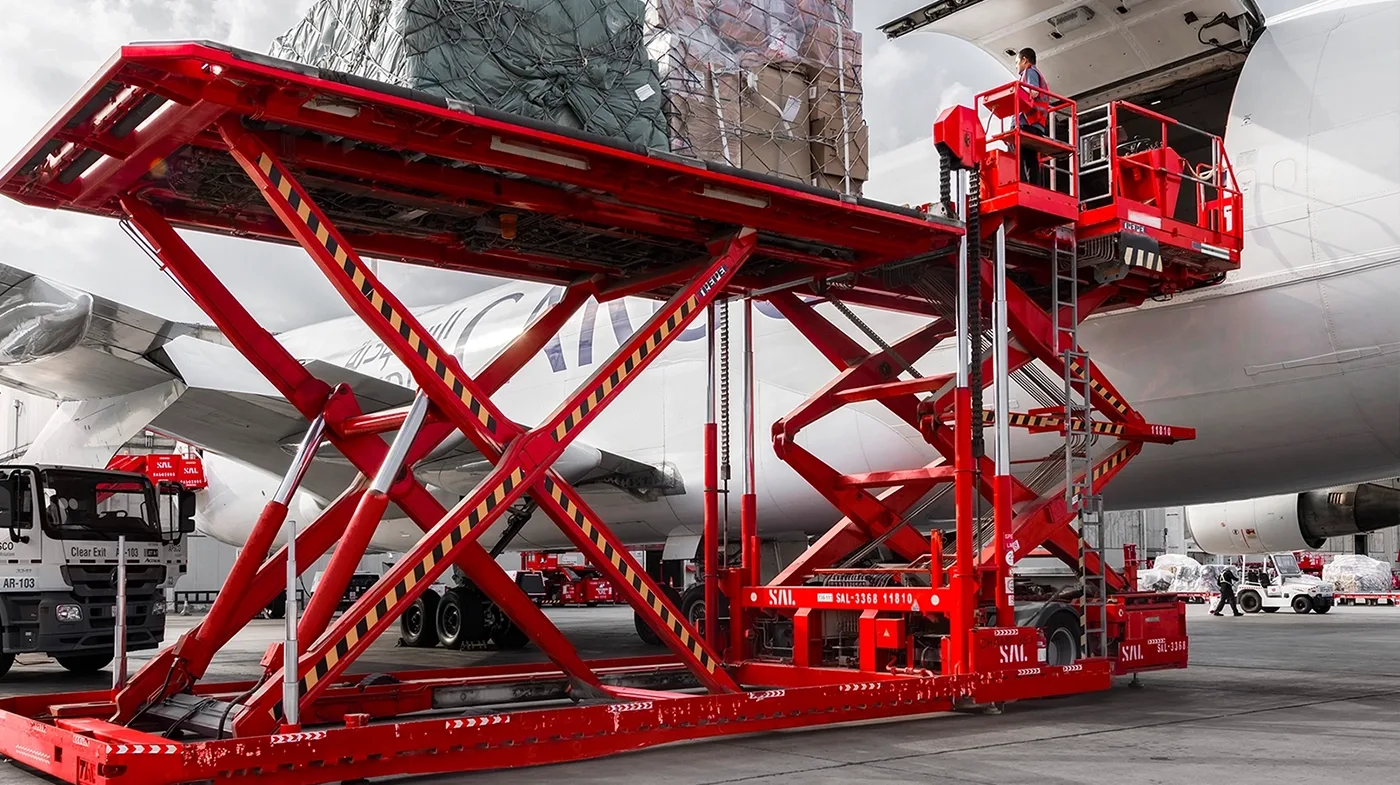
The Company operates cargo terminals and provides cargo ground handling services to its customers as part of a Standard Ground Handling Agreement for two types of cargo, cargo on cargo aircraft and cargo in the belly of passenger aircrafts, which include:

Outbound cargo
Cargo that is exported out of the Kingdom via airline companies.
Inbound cargo
Cargo is imported into the Kingdom via airlines companies.
Transfer/Transit cargo
Cargo arrives at the airport, is unloaded from the aircraft, then loaded again to a different aircraft for its onward journey.
Cargo Volumes by Type (Million KGs)
(FY 2025 Vs 2024)
| Cargo Mode | 2025 | 2024 | Change |
| Import/Inbound Cargo | 540 | 556 | -2.9% |
| Export/Outbound Cargo | 50 | 45 | 10.1% |
| Transfer/Transit Cargo | 371 | 372 | -0.1% |
| Total Volume | 961 | 972 | -1.1% |
Cargo Volumes Percentage by Location (Million KGs)
(FY 2025 Vs 2024)
| Cargo % by Location | 2025 | 2024 | Change |
| Jeddah | 39.4% | 39.1% | 0.3pp |
| Riyadh | 47.8% | 47.4% | 0.4pp |
| Dammam | 11.3% | 11.9% | -0.5pp |
| Madinah | 1.4% | 1.6% | -0.2pp |
| Other Domestic Airports | 0.2% | 0.1% | 0.0pp |
| Total | 100% | 100% | – |
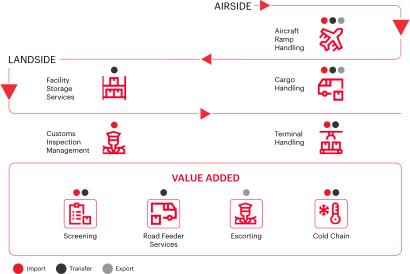
SAL’s cargo ground handling activities span three broad areas: Airside, Landside and Value-Added services. Together, these describe the full scope of services delivered as part of SAL’s ground handling offering.
- Airside services cover activities on the airfield directly linked to aircraft and flight operations, including but not limited to cargo handling and ramp-related activities.
- Landside services cover activities on the terminal and public-facing side of operations. These include, for example, facility storage management, customs inspection management and terminal handling.
- Value-Added services include screening, road feeder services, escorting and cold chain services,
extending
SAL’s handling capability beyond core cargo movements.
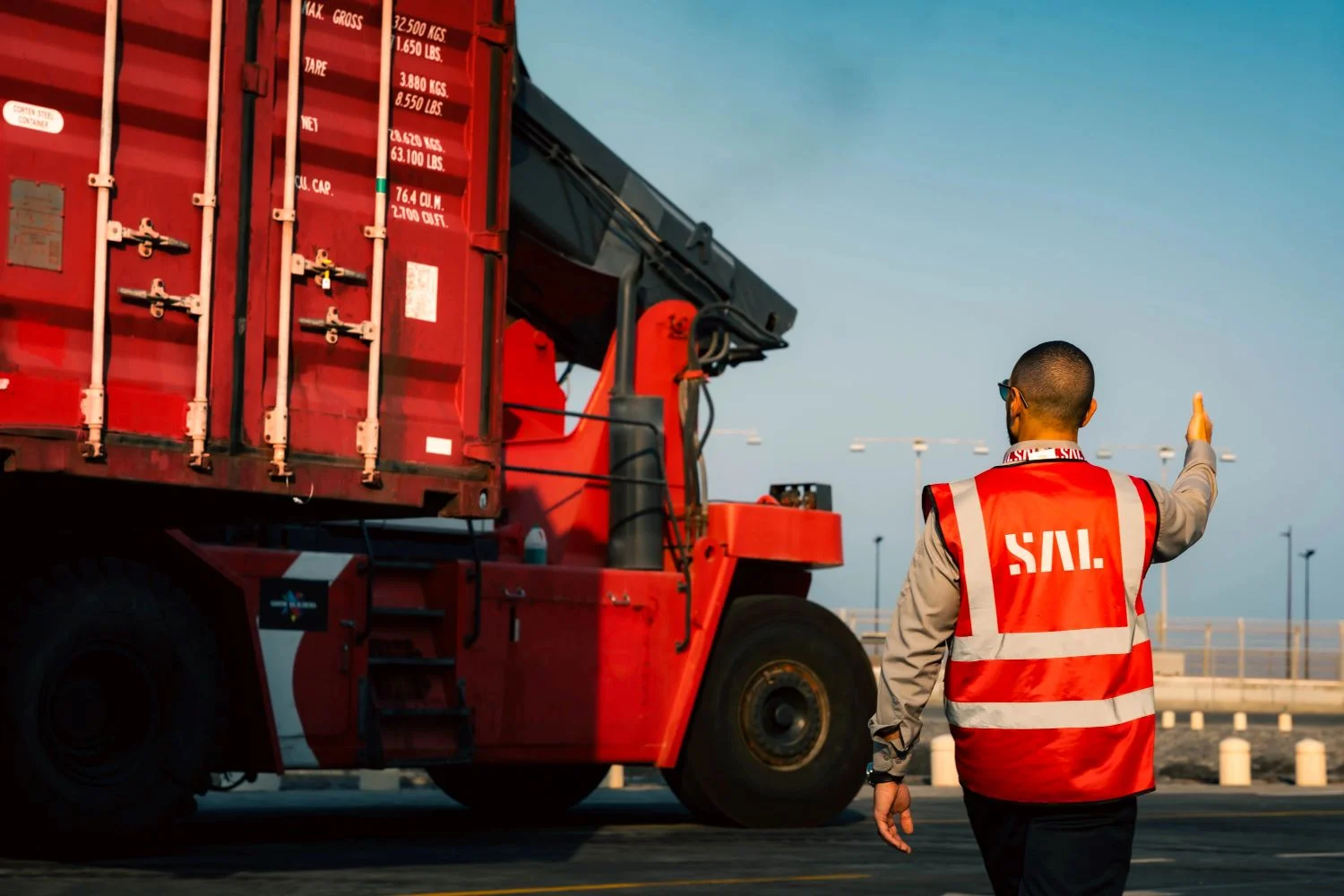
Overview:
Market-leading Cargo Ground Handling Division
Cargo Revenue and Volumes Quarterly Summary (2025 Vs 2024)
| Year | Q1 | Q2 | Q3 | Q4 | |
| Revenue (X Million) | 2025 | 322 | 339 | 372 | 423 |
| 2024 | 366 | 334 | 329 | 334 | |
| Change % | -12% | 2% | 13% | 26% | |
| Volume (Million KGs) | 2025 | 242 | 219 | 236 | 265 |
| 2024 | 256 | 235 | 228 | 253 | |
| Change % | -6% | -7% | 3% | 5% |
Collectively, these services enable SAL to handle nearly the full spectrum of cargo types, including general cargo as well as specialized items requiring enhanced handling, security, or environmental controls. Our expert teams deal with everything from live animals and perishable goods to pharmaceuticals and dangerous goods.
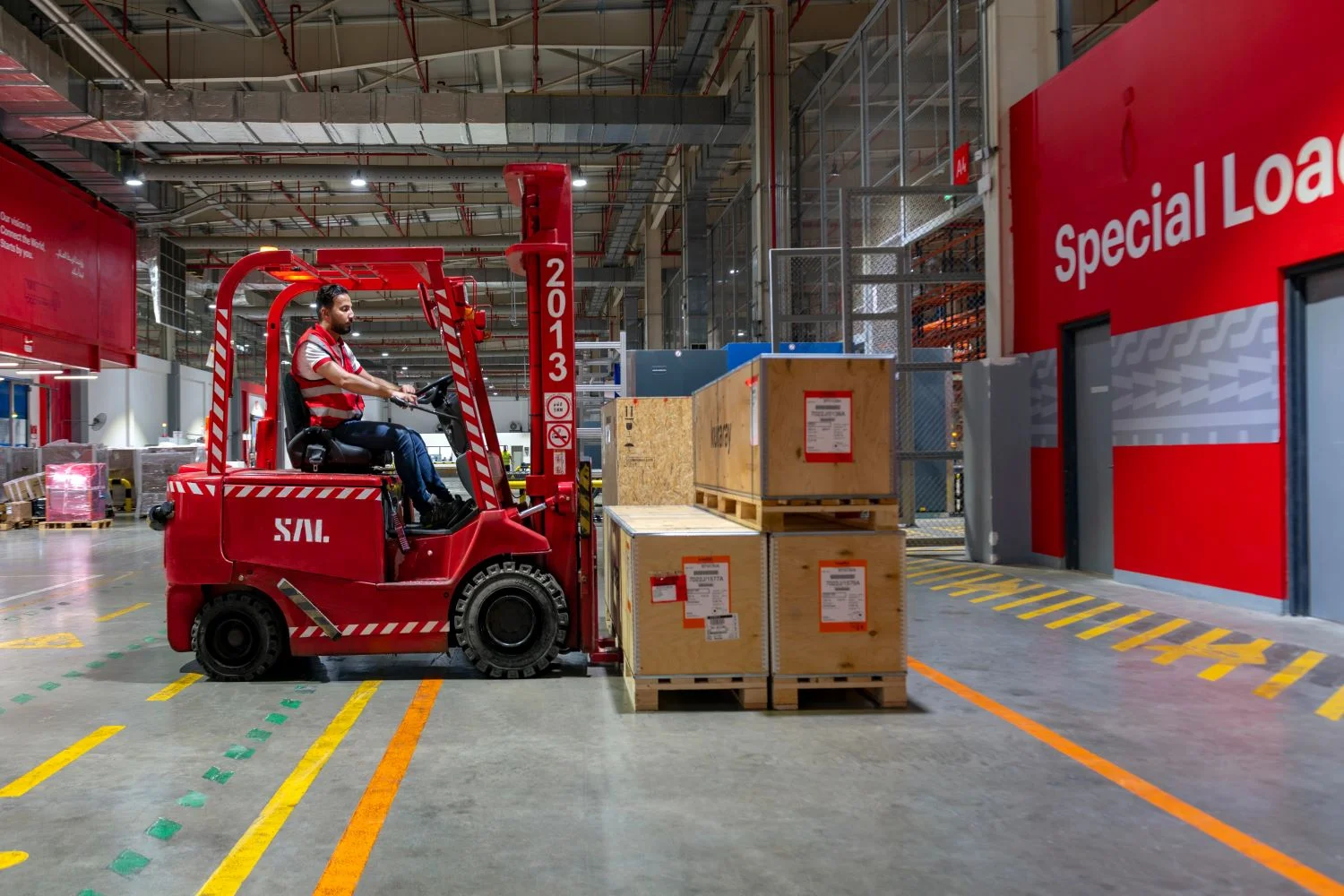
Type of Cargo Handled
General
Cargo

Valuable
Cargo

Vulnerable
Cargo

Live
Animals

Perishable
Goods

Pharma &
Healthcare

Dangerous
Goods &
Materials

Courier
Handling &
E-commerce

Through this breadth of services, SAL provides end-to-end cargo ground handling solutions supporting airlines, freight forwarders and national trade flows. Cargo Ground Handling also serves as the primary operational interface with airline customers and provides an important link to the Company’s Logistics and Logistics Zones activities where integrated solutions are required.
Cargo Volumes by Product Type
(Million KGs) (FY 2025 Vs 2024)
| Cargo Product Type | 2025 | 2024 | Change |
|
General Cargo Volumes |
565 |
558 |
1.3% |
|
Courier Volumes |
154 |
177 |
-11.9% |
|
Perishables |
170 |
163 |
4.3% |
|
Pharma |
37 |
41 |
-9.8% |
|
Other Volumes |
35 |
34 |
4.1% |
| Total Volume | 961 | 972 | -1.1% |
Key Financial and Operational Metrics (FY 2025)


X 1.46 billion
(+7% YoY)
Revenue
85%
(+1.9pp compared to 2024)
Division’s Revenue contribution from SAL Overall
51.1%
(+0.7pp)
EBIT Margin
961 million KGs
(-1% YoY)
Cargo Handled
19 Terminals
Across the Kingdom of Saudi Arabia
169,400 sqm
Total Cargo Terminal Area
471 flights
(+1%)
Daily Flights Handled
+70
(+9% YoY)
Active Customers
+6 customers
New Airlines or Customers Added
171,979 flights
Total Flights Handled
1,080 flights
(+6% YoY)
Charter Flights Served
100%
Client Retention Rate
3 years
Average Contract Length
94%
Contract Win Rate
88%
SLA Adherence Rate
0.14%
Re-handling/Damage Rate
16%
E-commerce % Share of Total Cargo
- Key Developments and Milestones
In 2025, the SAL Cargo Ground Handling division has executed a number of signings including some new airlines and renewals of current partners, as follows:
|
Date |
Airline Partner/Customer |
Type |
| 15 June 2025 | Azerbaijan Airlines | New Contract |
| 19 June 2025 | Philippine Airlines | New Contract |
| 22 June 2025 | ITA Airways | New Contract |
| 25 June 2025 | Silk Way Airlines | New Contract |
| 13 October 2025 | Saudi Post (SPL) | New Contract |
| 23 October 2025 | Emirates SkyCargo | Renewal of a contract |
| 28 October 2025 |
China Cargo Airlines (a subsidiary of China Eastern Airlines) |
New Contract |
| 30 October 2025 | TAM Group |
Strategic Partnership for International Expansions |
| 16 November 2025 | FedEx Express Saudi Arabia Transportation | New Contract |
| 15 December 2025 | Syrian Airlines | New Contract |
- Outpacing Market Growth with Scalable Margins, Proving Resilience through Global Trade Cycles
Market Leadership: Largest KSA air cargo handler with diversified flows and long-term contracts with airlines ensure high retention and visibility
Growth in Cargo Ground Handling was driven by stable performance across core clients, further strengthened by expanded service offerings and product innovation. During this year, SAL has successfully converted a number of charter flights into long-term scheduled contracts, underscoring deepening relationships with global airline partners and its ability to translate commercial momentum into recurring, high-quality revenue.
Proven ability to adapt to external challenges in consistently adapting to operational disruptions while safeguarding market share and service continuity, and expanding landside and value-added services
COVID-19
Competitive
Pressure
Shipping
Disruptions
Global Trade
Cyclicality
Resilience is part of SAL’s DNA. Time and again, we have shown our ability to adapt to a fast-changing environment and keep delivering for the Kingdom and our customers. When COVID-19 disrupted global aviation, we acted swiftly, reallocating resources, safeguarding critical supply chains, and ensuring Saudi Arabia stayed connected to the world. We have navigated through shipping disruptions, from port congestion to shifts in trade routes, by staying agile and planning ahead - keeping our service levels reliable under pressure. In the face of competitive pressures, we have held our ground by differentiating on quality, reliability, and customer trust - not just competing on capacity or price. Across the cyclicality of global trade, we have built resilience into our operations, allowing us to manage downturns without losing momentum and capturing opportunities when markets rebound.
Together, these experiences prove that SAL is not just able to withstand disruptions, we turn challenges into drivers of growth and leadership.
- Sustained Financial Outperformance Through Cargo Ground Handling Agility & Excellence
Proven Capacity to Capture Future Demand
Looking now to the future, we forecast that by 2030 we will more than double 2024 revenue, reaching X 2.2 billion. This represents a compound annual growth rate of 9% when
looking back to 2020.
In the same period, we believe EBIT will surpass X 900 million, whilst maintaining an industry leading EBIT margin of over 40%.
There are a multitude of different factors that we see enabling these forecasts, first of which would be our
strong and continued market leadership which will allow us to capture the general market growth. Our
relentless focus on operational efficiency ensures that growth translates directly into profitability. By
optimizing processes, deploying technology, and improving turnaround times, we unlock solid margins. Our
deep customer partnerships mean our forecasts are grounded in strong, long-term relationships. We are
trusted by leading global airlines, shippers, and local partners - which gives us confidence in sustainable
demand. Expanding infrastructure and network reach, from cargo facilities to regional connectivity, creates
the backbone required for scalable growth. Finally, our proven agility and resilience ensure that we can
adapt to shifting market conditions.
- Rising Demand Driven by Trade, E-Commerce and Diversification
According to independent market research by ALG, the market is expected to grow to over 2.2 million tonnes by 2030 – representing an 9% compound annual growth rate for the years 2025-2030. This forecast is propped up by growth across all three cargo categories, import, export and transit.
Growth Drivers by Segment
Imports
Rising consumer demand, fast-growing e-commerce, and reduced “leakage” to neighboring hubs supported by modernized airport infrastructure
Exports
Vision 2030 diversification and national manufacturing initiatives (e.g., pharma, electronics) boosting outbound cargo flows
Transits
Strategic location and major logistics investments positioning Saudi Arabia as a global hub, capturing more transfer and transit volumes
- Investing Heavily in Cargo Ground Handling Infrastructure
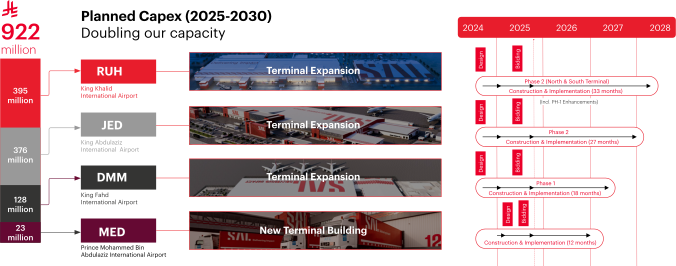
The Cargo Ground Handling Division continued delivering its X 922 million capital deployment plan, executing in a disciplined and targeted manner to reinforce its leadership in cargo ground handling. Investments are focused on expanding terminal capacity across the key airports of Riyadh, Jeddah, Dammam and Madinah, and enhancing operational resilience and service quality.
Planned CAPEX (2025-2030) Doubling our Capacity
- Key Growth Drivers for SAL’s Cargo Ground Handling
Market
Leadership
Operational
Efficiency
Customer
Partnerships
Infrastructure &
Network Reach
Agility &
Resilience