






A Foundation for Safe, Resilient, and Responsible Operations
Health, Safety, Security and Environment (HSSE) is a cornerstone of SAL’s operating model and identity. In a safety-critical, aviation-regulated environment, HSSE is not treated as a standalone compliance requirement; it is embedded into operational design, decision-making and daily execution across Cargo Ground Handling, Logistics, and the emerging SAL Zones platform. This approach enables safe scale, maintains regulatory confidence, strengthens trust with customers and partners, and supports sustainable growth as SAL advances toward its 2030 ambitions.
SAL’s HSSE direction is anchored in a clear policy framework. At the core, we commit to safeguarding our people, assets, operations, environment and reputation by applying the highest standards of HSSE performance and maintaining full compliance with national and international regulations. This commitment is reinforced through leadership accountability, robust risk management, integrated systems, transparent reporting, continuous improvement, workforce competence, emergency preparedness, sustainability principles, change management discipline, and a culture of participation and engagement.
Our HSSE Policy Commitments and Operating Principles
SAL’s HSSE Policy Statement sets the tone from the top and translates into practical operating behaviors across the business. Leadership and accountability are demonstrated at all levels, with HSSE integrated into daily operations and reinforced through clear ownership and active oversight. Compliance remains a baseline requirement: SAL meets applicable laws, regulations and standards, while aligning operations with global best practice.
The policy is operationalized through an integrated HSSE management approach that proactively identifies and mitigates hazards, threats and environmental aspects through regular reviews and assessments. SAL’s occurrence management model emphasizes reporting, investigation, corrective actions, prevention of recurrence, and continuous learning. Importantly, SAL maintains a confidential reporting culture designed to encourage transparency, inclusivity and trust, supporting proactive risk identification and stronger safety outcomes.
Training and competence development are treated as essential enablers of readiness and resilience. HSSE responsibilities are reinforced through role-specific capability building, awareness initiatives, and structured communication. Alongside this, SAL’s HSSE policy incorporates sustainability commitments, minimizing environmental impact through resource efficiency, waste reduction, energy conservation, pollution prevention and environmentally responsible technologies, supported by a tested approach to emergency preparedness and crisis response.
Finally, SAL’s HSSE policy emphasizes culture and engagement. It promotes a learning-oriented, proactive culture built on workforce participation and shared responsibility, supported by targeted awareness, leadership involvement and open communication. This is complemented by disciplined change management to ensure that operational or organizational changes are risk-assessed, approved, communicated and monitored. The policy also recognizes alignment with human rights principles, ensuring policies and practices reflect these values within SAL’s workplace environment.
Certifications, Standards, and Regulatory Confidence
SAL’s HSSE framework is validated through nationally mandated and globally recognized certifications and aviation regulatory requirements, supporting the Company’s positioning as a trusted operator across international and domestic cargo corridors.
In 2025, SAL successfully completed ACC3/RA3 revalidation, restoring GREEN status with UK/EU civil aviation regulators and reaffirming compliance with global air cargo security requirements. SAL also maintained alignment with key aviation and international standards, including GACA requirements and ISAGO registration.
SAL strengthened its management system maturity through ISO certifications achieved and maintained in 2025, including:
- ISO 14001 (Environmental Management)
- ISO 45001 (Occupational Health & Safety Management)
- ISO 18788 (Security Operations Management)
In addition, SAL’s participation in IATA SeMS “Security Management System” reinforces the Company’s security governance and credibility in aviation-security best practice. Collectively, these certifications and standards represent more than compliance: they reflect SAL’s strategic commitment to operational excellence, transparency and continuous improvement, key foundations for responsible growth.
Health, Safety, and Security Performance
Safety performance remains a primary indicator of operational discipline and workforce engagement at SAL. The Company operates a comprehensive Safety Management System supported by proactive risk identification, incident reporting and continuous improvement practices across operations.
For 2025, the HSSE performance summary reflects:
| Metrics | Units | 2025 | 2024 |
| Number of Hours Worked | 100k hrs | 50.07 | 50.71 |
| Total LTIs | Number | 2 | 0 |
| Total Aircraft Damage Occurrences | Number | – | 1 |
|
Aircraft Damage Frequency Rate (ACDfr) |
1,000 Flights | 0.00 | 0.08 |
| Dangerous Goods (DG) Occurrence Rate | 100,000 hrs | 0.02 | 0.00 |
| Reporting Culture Rate | 2,000 hrs | 2.53 | 0.01 |
|
Major Security Incident Rate |
100,000 hrs | 0.00 | 0.00 |
|
Major Environment Incident |
Number | – | - |
SAL also continued strengthening handling and cargo security controls, including dangerous goods governance; the dangerous goods occurrence rate is reported and is tracked through structured risk control, assurance and reporting mechanisms.
Where performance indicators showed movement year-on-year, SAL’s approach remains centered on learning and prevention, investigating occurrences, applying corrective actions, and sharing lessons learned to strengthen controls and prevent recurrence.
Digital Enablement of HSSE
Aligned with SAL’s broader digital transformation, HSSE increasingly leverages real-time dashboards, analytics and structured online reporting embedded within the integrated management system. These tools enhance visibility of performance trends, incidents and compliance status, enabling faster response cycles, proactive decision-making and stronger assurance across operational and leadership levels.
This digital enablement strengthens SAL’s ability to manage risk at scale while improving transparency and management oversight, particularly important as the operating footprint expands and as SAL Zones progresses through early delivery phases.
2025 SAL HSSE Achievements
|
HSSE Integrated |
Transitioned to a fully integrated HSSE management system, aligning health, safety, security, and environmental governance under a unified framework to enhance consistency, compliance oversight, and operational efficiency across all business lines |
|
Policy and Process Standardization |
Updated and harmonized HSSE policies and procedures across business units, strengthening governance clarity, accountability, and cross-functional alignment |
|
Digital Transformation |
Embedded real-time dashboards and digital reporting tools within the Integrated Management System, enabling data-driven oversight, performance transparency, and proactive risk management |
|
ACC3/RA3 Revalidation |
Successfully completed UK/EU ACC3/RA3 revalidation, restoring GREEN status and reaffirming SAL’s full compliance with international air cargo security requirements |
|
National and International Certifications |
Maintained and strengthened compliance with GACA, ISAGO, and international regulatory frameworks, reinforcing SAL’s operational credibility and regulatory confidence |
|
ISO Certifications Achieved |
Successfully obtained and maintained ISO 14001 (Environmental), ISO 45001 (Occupational Health & Safety), and ISO 18788 (Security Operations Management), demonstrating adherence to globally recognized best practices in sustainable, secure, and responsible operations |
HSSE Enabling SAL’s Business Pillars
HSSE directly enables SAL’s core business pillars by embedding health, safety, security and environmental considerations into operational design and execution. In Cargo Ground Handling and Logistics, HSSE supports safe cargo and airside operations, secure management of high-value and sensitive goods, and reliable service delivery under strict aviation requirements. For SAL Zones, HSSE is integrated “by design,” ensuring sustainability and safety considerations are embedded into early infrastructure planning as platforms scale.
Through a structured, risk-based approach, HSSE also supports certification readiness and business continuity by strengthening audits, inspections, corrective action tracking and compliance monitoring, improving turnaround reliability and reinforcing confidence across airlines, regulators and stakeholders.

SAL Cargo Ground Handling
End-to-end logistics, high-value & specialized cargo

SAL Logistics
Market leadership, operational reliability, regulatory excellence

SAL Zones
Falcon City hub, multimodal connectivity, future investments
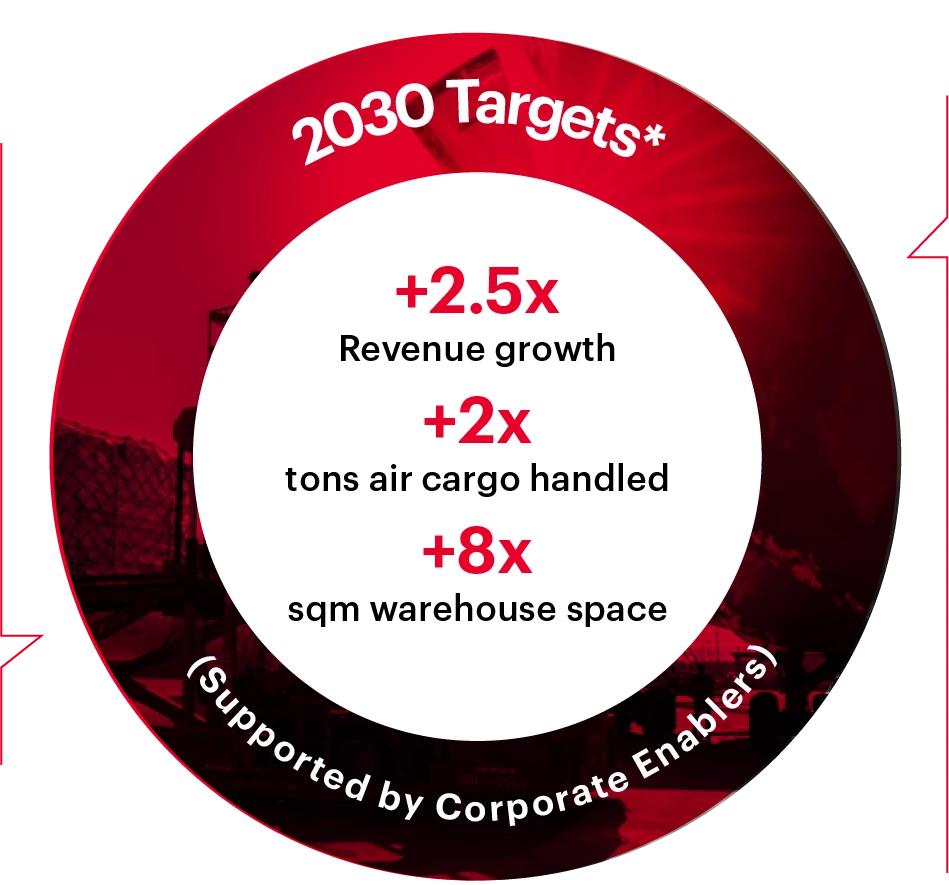
HSSE at SAL is a strategic commitment that protects people and assets, safeguards operating licenses, and reinforces credibility with regulators and airline partners. Through a unified policy framework, integrated management systems, globally recognized certifications, structured governance, digital enablement and workforce engagement, SAL continues to strengthen its position as a trusted enabler of safe, secure and sustainable logistics, supporting responsible growth today and long-term value creation through 2030 and beyond.